We all experience anxiety to some degree and at some point in our lives. Some of us experience anxiety in the mind - through the form of racing thoughts, overthinking or ruminating or even getting very creative with scenarios about the future in our heads. Some of us may only or also experience anxiety in the body. This can present as a general nervousness or buzzing sensation in the body, tension or feeling tight in the chest or stomach, feeling hot or cold in the hands and feet and it can even show up as a variety of digestive issues.
While it can be beneficial to understand your anxiety and it’s triggers, Art Therapy allows for you to immerse yourself in exploring, being present to and a witness to your anxiety as well as exploring coping skills to support you and your body in challenging moments.
In this blog post, we will go more in depth into the very common question: What does an individual Art Therapy session for anxiety look like?
Disclaimer: this blog post offers an example of what an individual Art Therapy session for anxiety may look like. Art Therapy sessions should always be conducted by a board-certified, registered Art Therapist with sessions tailored to each client’s individual needs and treatment plan. This blog post does not substitute therapy and the directives should not be offered as a substitute for therapy either.
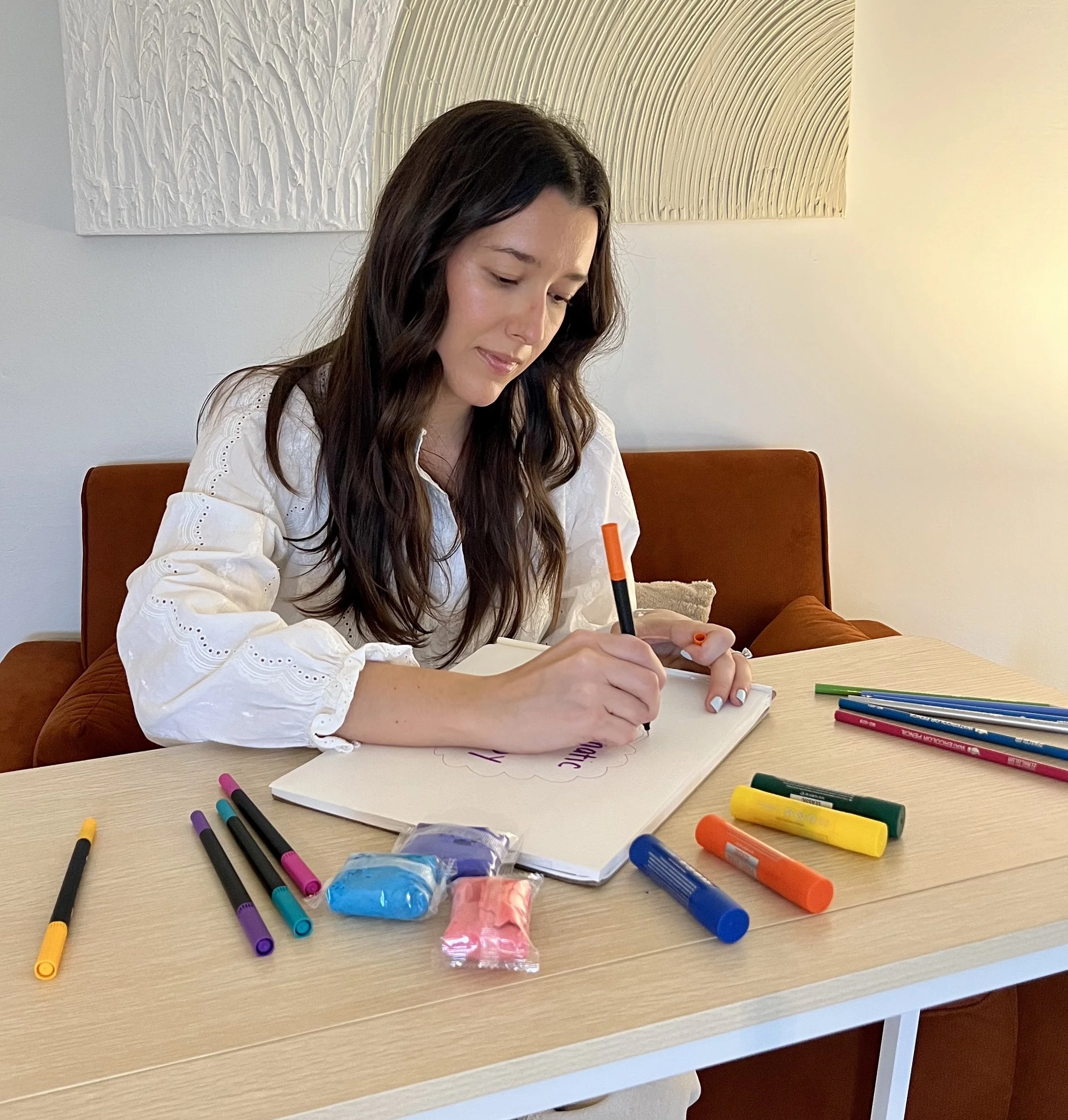
Check-In and Ground: How is Your Anxiety Showing Up?
Every session begins with a check-in, an opportunity for you as the client to arrive into the Art Therapy space and reflect on how your anxiety is showing up. This verbal check-in can also be a way to identify how your anxiety has been present over the last week or since your last therapy session in addition to how it is showing ups for you in the present moment.
In your check-in, you can reflect on the different ways in which your anxiety shows up: is it present in the form of racing thoughts? Are you noticing you feel it more in your body?
The check-in also offers an opportunity for the therapist to support you in feeling more grounding in your body. This can be in the form of a mindfulness grounding practice or it can also be using art materials, such as clay, to come into the present moment.
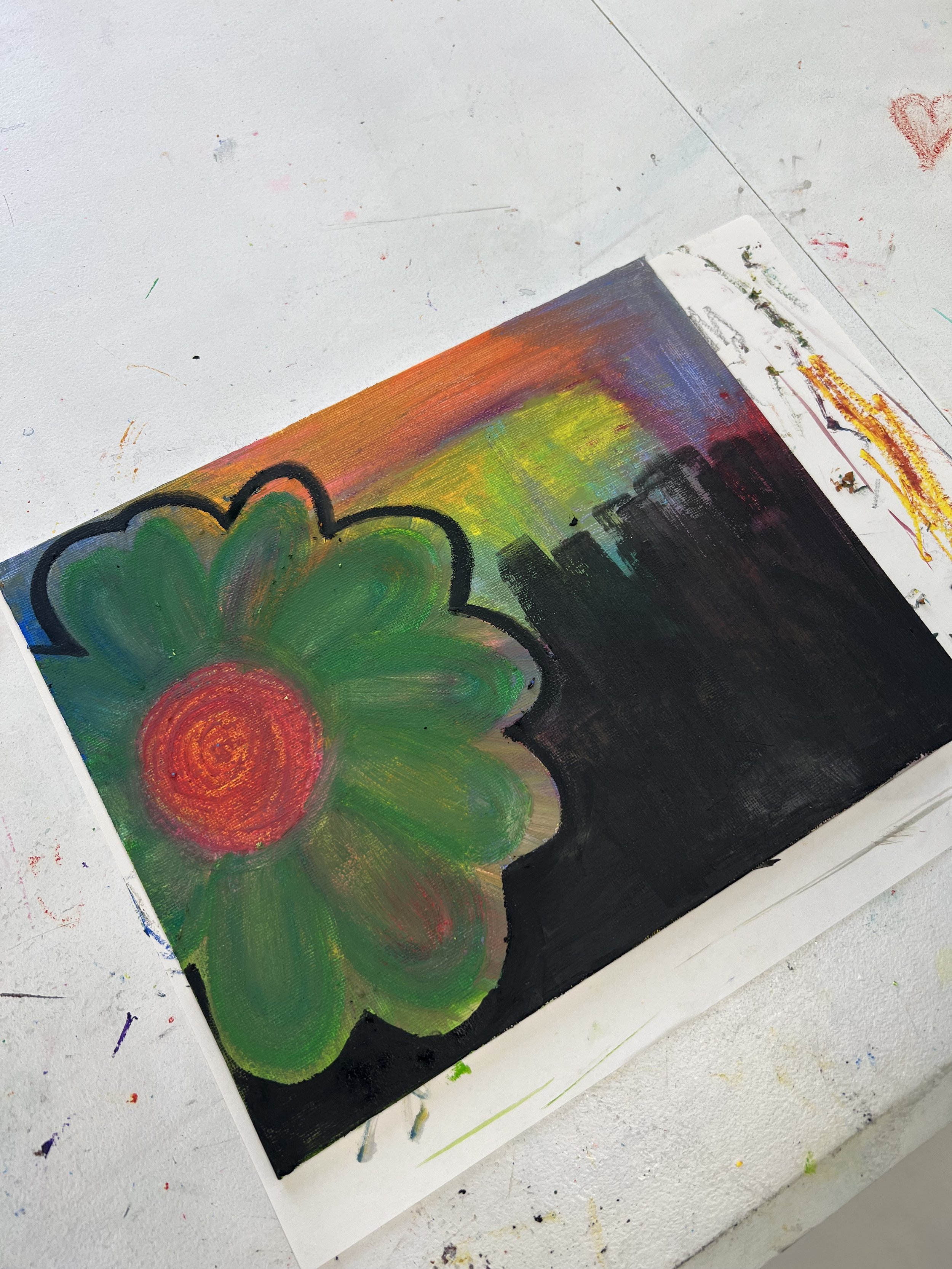
Creative Expression: Exploring Your Anxiety Through Art
Art Therapy invites a creative way for you to express and explore your inner experience that may feel challenging to put into words or explain. Your Art Therapist may offer a directive based off the check-in discussed previously as a way to gain deeper awareness, connection or insight of your anxiety.
Some examples of these directives can include:
Body Mapping: using drawing materials, create an outline of a shape to represent your body. Then, using lines, shapes and colors, visually depict the ways in which you notice your anxiety in your body. This can include the sensations present or even the manifestation of your thoughts as well.
Create a character to represent your anxiety: Using some clay, create a figure (can be either abstract or realistic) to represent your anxiety. Think of what color(s) she/he is, what size they are, what shapes make them up, etc.
What does your anxiety need?: create an image or series of images to explore what your anxiety needs. While it may feel challenging at first, your Art Therapist can serve as a support for you in this moment to further explore what are some needs your anxiety may have.
Each of these directives support various goals to better understand, be present to and increase your connection to your anxiety.
Reflections: What Did You Learn About Your Anxiety?
Once you have finished engaging in the art-making process, you and your Art Therapist will spend some time reflecting on the experience. One of the biggest things that differs Art Therapy from an art class is that the product itself does not matter - what is most important is the process and your art-making experience.
The reflection portion of the session invites in a sense of curiosity to better understand and gain insight from your experience. This can include looking at the colors used, the quality of the lines or shapes, noticing what stands out to you or the therapist or the relationship between the objects - to name a few.
From this process, you perhaps begin to notice patterns or draw insight from these reflections. For example, in the body mapping, you may notice that there is a pattern of the area where you hold anxiety in your body and the areas of your body that you do not. In creating your anxiety figure, you may perhaps begin to engage in role play with it to better understand it’s needs.
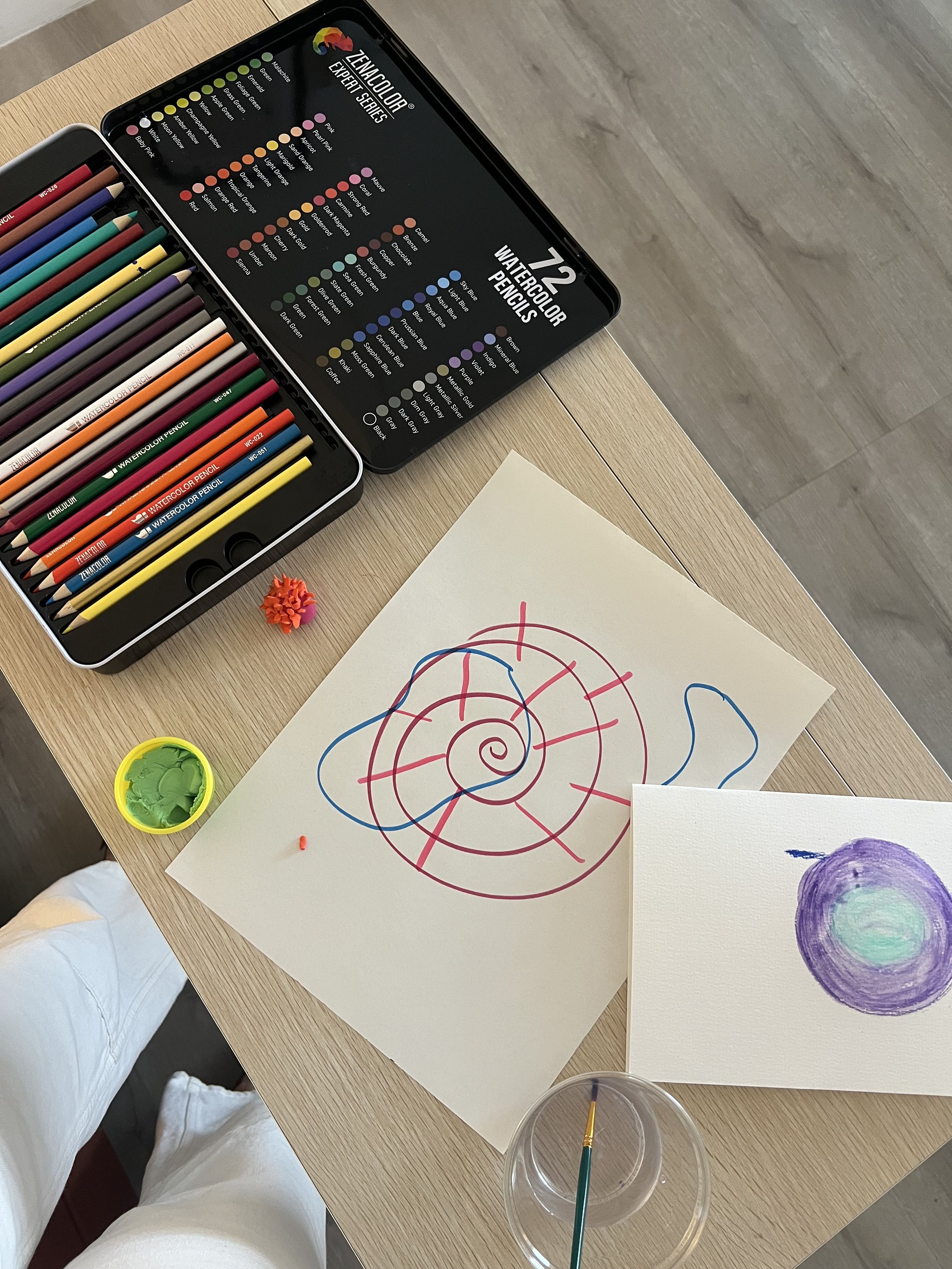
Developing Coping Skills: How Can You Best Support Your Anxiety?
Once you have gained a deeper understanding of how your anxiety looks, feels, exists, manifests, etc. it is time to explore how to best support your anxiety. Coping skills are a great way to tend to the needs of your anxiety - which may be the next thing you explore, what does your anxiety need?
Sometimes your anxiety needs a distraction from the present moment so you may implement coping skills like a coloring book or a book to reach. Your anxiety may need ways to help calm down and self soothe so you may practice different breathing techniques or tapping for your nervous system regulation. Your anxiety may also need to be listened to our heard so your Art Therapist may introduce you to creative journaling as a support.
What is most important when it comes to coping skills is to have a variety of options and to know when you can implement them. These may be things you continue to come back to and practice in future sessions to continue to increase your confidence in using them.
Finding Support for Anxiety Using Art Therapy in Miami
Living with and experiencing anxiety can feel exhausting, overwhelming and scary at times that is why finding the right support for you is incredibly important and can make such a difference on your journey. Art Therapy offers you the opportunity to explore, understand, connect with and manage your anxiety through a creative (and at times even fun) way. Finding the right Art Therapist for you will be an added bonus is having your process be that much more impactful.
My personal approach to Art Therapy for anxiety is client-centered, somatic and trauma informed and is designed to support you in feeling more confident on how to better understand and cope with your anxiety. If you are in Miami and are looking for an Art Therapist to support you, I have current availability in my schedule and invite you to schedule a free consultation call to learn more.
