Grief is often associated with the mourning process of the death of someone. However, there are many ways in which we may experience grief. We may experience grief as it relates to change within friendships or social dynamics, the loss of a job, the feelings associated with a big move to a different state or country - just to name a few.
Many times, we attempt to cope with grief by talking to someone, processing the loss and feelings associated and at times trying to make meaning of our situation. This can be incredibly beautiful and healing in the process yet it does not address the ways in which we hold on to grief in our physical body.
Somatic Healing practices support your body in finding a non verbal way to connect with it, notice the physical experience and cope with the experience. Rather than trying to rush the healing process or eliminate grief, Somatic Healing practices can help us develop a more compassionate relationship with ourselves as we navigate loss. This blog post will teach you three Somatic Healing practices to support you.

How Grief Can Show up in the Body
We all carry our emotional experiences in different parts of our bodies and the way in which the sensations present themselves can also differ from person to person. However, there are some sensations or experiences that we may generally find similarities in.
When it comes to grief the emotions associated can include sadness, anger, denial, loneliness, frustration, guilt, aching or longing. In our body, the sensations of grief may be felt in the chest, upper back, shoulders and the throat. This can include tension or tightness, physical pain or discomfort, an emptiness or lack of sensation in any or all of these areas.
Somatic Healing Practices for Grief
The following Somatic Healing practices for grief are a gentle support for the areas and sensations mentioned above. It is always advised to go at your own pace (and even recommended to start slow), to stop if your body becomes over activated or if it no longer feels supportive for you. I recommend using your discernment to decide if you do each practice on their own or combine more than one. These practices may activate an emotional response so I also recommend making sure you are in a safe and supportive space as you practice these.
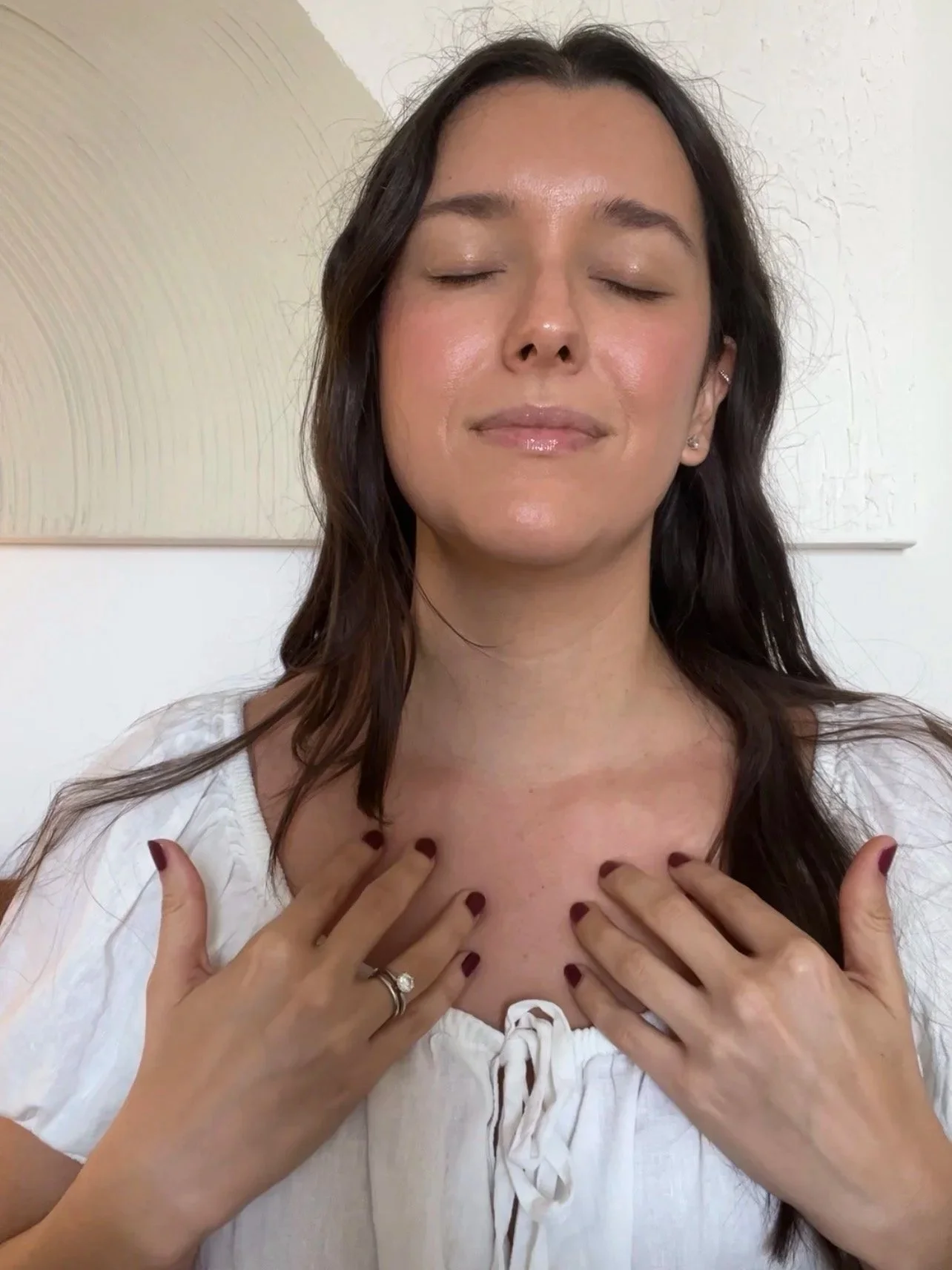
Supportive Self Touch
Start by finding a comfortable and safe space either sitting or laying down.
Take some time to seal the eyes, if it feels safe for you, and notice the supportive surface beneath you, allowing for your body to get heavy here.
Then, notice the sensations in your chest, shoulders, neck, throat and upper back.
Find your collar bones and start to gently push down right below them with your fingertips on both sides.
Give yourself permission to explore how your body responds to different forms of self touch: rubbing side to side, tapping, pressing down or massaging. You can even use essential oils or cream as a support for your body in this process.
Once you finish, take some time to bring your body back with some gentle movement, deep breaths, noticing how your body feels with the eyes being the last too open.
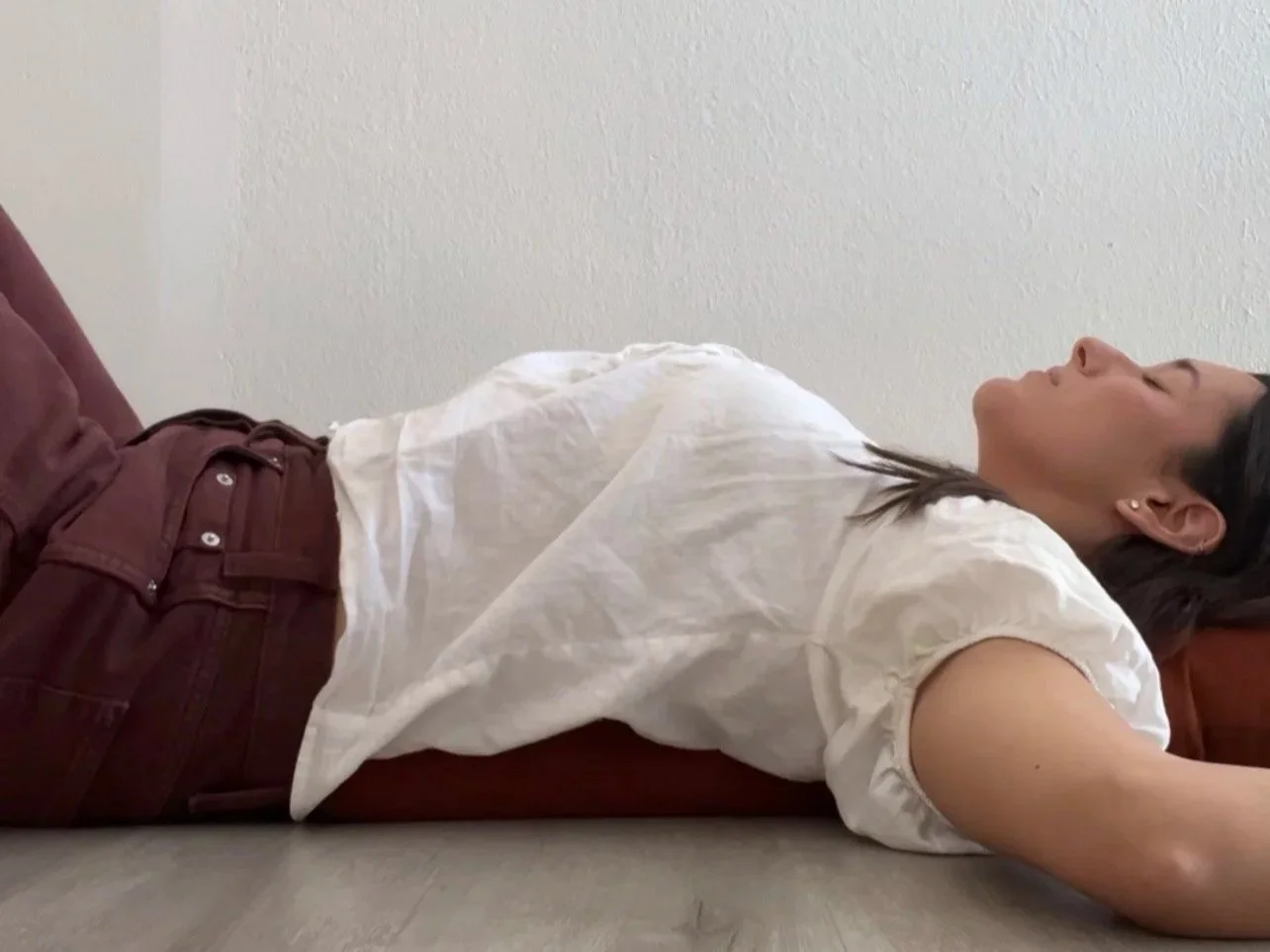
Supportive Heart Opener
Grab a long pillow or bolster and an extra one or block as well as some space on the floor. You can place a yoga mat on the floor if you prefer.
Place the pillow on the floor in a vertical position and slowly start to lower your back on the pillow. Your seat should be on the floor as your spine lays along the pillow or bolster. You can add a smaller pillow or a block to support your head, if not, let it hang towards the floor. Your feet can be planted on the floor with knees bent or out long.
Take some deep breaths here as your body lands and adjusts to the new position.
Play around with your arm and hand placement - they can be on your stomach, by the sides of your body towards your feet or you can cactus the arms out by your sides. Depending on the amount of tension present in your chest, shoulders and upper back this will feel different for each person. Always be mindful of what feels comfortable versus where you may be pushing yourself too much.
Spend as much time in this position as you may like, taking long and deep belly breaths.
As you feel ready to come out of it, you can turn over to one side in a fetal position, eventually coming back to a seat through gentle movement, having your eyes the last to open to re-orient yourself into the space.
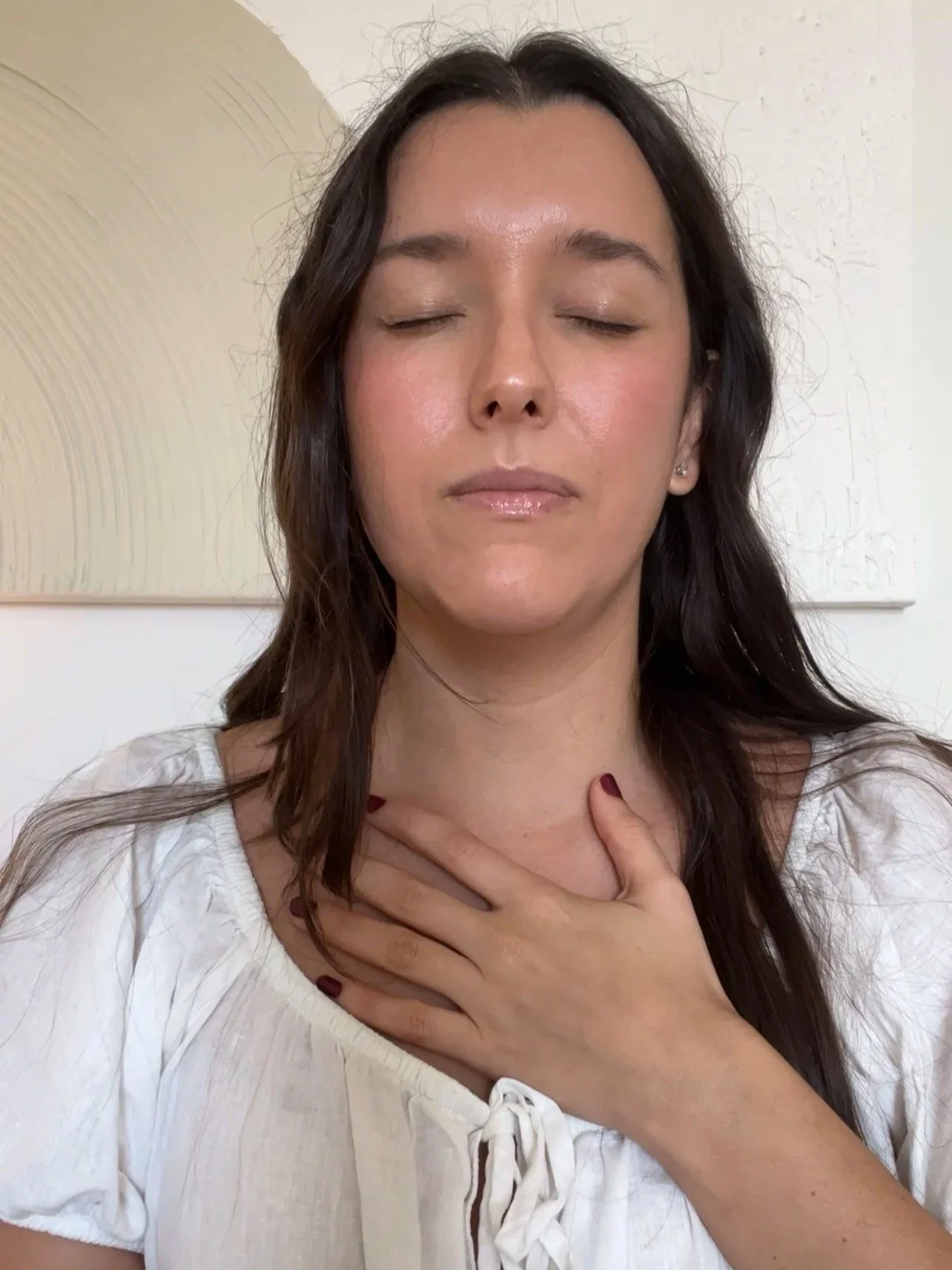
Humming Breath
Find a comfortable seat either sitting or lying down.
Take some time to seal your eyes, if it feels comfortable to you, and feel the weight of your body against the surface beneath you.
I invite you to place your hand over your heart and chest as an additional support in this practice.
As you feel ready, take a full, deep breath in through your nose.
As you exhale, keep the lips sealed as you create a humming sound.
Notice the vibration in your chest and body as you use the exhale as a hum sound.
Repeat this breathing practice three times through or continue as many as feels most supportive for your body.
Once you finish, take some time to bring your body back with some gentle movement, deep breaths, noticing how your body feels with the eyes being the last too open.
No matter where you are in your grieving process or what you may be grieving, these Somatic Healing practices can be a beautiful way to support your body’s sensations and emotional experience. Always remember that grief always looks different for each of us and I invite yourself to practice grace for your body as it continues to cope and process.
If you (or someone you know) are looking for additional support as you navigate grief, I offer Art Therapy and Somatic Healing for adults in Miami, Florida, as well as virtual sessions throughout Florida. Together, we can explore ways to reconnect with your body, process your emotional experiences, and develop supportive tools for navigating loss. I offer a free consultation call where we can discuss your needs and determine whether working together feels like a good fit. Click here to schedule yours today.
